Showing posts with label Vegetable Recipes in Urdu Indian Chinese Phlippines Pakistani Pinterest Without Oil Pinoy Style Panlasang Pinoy. Show all posts

Thursday, 6 November 2014

Asian Vegetable Recipes,Vegetable Recipes in Urdu Indian Chinese Phlippines Pakistani Pinterest Without Oil Pinoy Style Panlasang Pinoy

source:- Google.com.pk

Asian Vegetable Recipes Biography

Asian cuisine encompasses a wide variety of regional cuisines native to India. Given the range of diversity in soil type, climate and occupations, these cuisines vary significantly from each other and use locally available spices, herbs, vegetables and fruits. Indian food is also heavily influenced by religious and cultural choices and traditions.
The development of these cuisines have been shaped by Dharmic beliefs, and in particular by vegetarianism, which is a growing dietary trend in Indian society.[1] There has also been Central Asian influence on North Indian cuisine from the years of Mughal rule.[2] Indian cuisine has been and is still evolving, as a result of the nation's cultural interactions with other societies.[3][4]
Historical incidents such as foreign invasions, trade relations and colonialism have also played a role in introducing certain foods to the country. For instance, potato, a staple of Indian diet was brought to India by the Portuguese, who also introduced chillies and breadfruit.[5] Indian cuisine has also shaped the history of international relations; the spice trade between India and Europe is often cited by historians as the primary catalyst for Europe's Age of Discovery.[6] Spices were bought from India and traded around Europe and Asia. It has also influenced other cuisines across the world, especially those from Southeast Asia, the British Isles and the Caribbean.[7][8]

Indian cuisine reflects a 5,000-year history of various groups and cultures interacting with the subcontinent, leading to diversity of flavours and regional cuisines found in modern-day India. Later, mughals, British, and Portuguese influence added to the already diverse Indian Cuisine.[9]
A normal diet in early India consisted of legumes, vegetables, fruit, grain, dairy products, honey, and sometimes eggs and meat. Over time, segments of the population embraced vegetarianism. The advent of Buddhism and Jainism affected this shift, as well as an equitable climate permitting a variety of fruit, vegetables, and grains to be grown throughout the year. A food classification system that categorised any item as saatvic, raajsic or taamsic developed in Yoga tradition. The Bhagavad Gita prescribes certain dietary practices (Chapter 17, Verses 8–10).[10] During this period, consumption of beef became taboo, due to cattle being considered sacred in Hinduism.[11] Many Indians continue to follow this belief, making the use of beef in Indian cuisine somewhat rare. Beef is generally not eaten by Hindus in India.[12]

During the Middle Ages, several North Indian dynasties were predominant, including the Gupta dynasty. Travellers to India during this time introduced new cooking methods and products to the region, including tea and spices. Northern India was later invaded by Central Asian cultures, which led to the emergence of Mughlai cuisine, a mix of Indian and Central Asian cuisine. Hallmarks include seasonings such as saffron.[13]
Staple foods of Indian cuisine include pearl millet (bajra), rice, whole-wheat flour (atta), and a variety of lentils, especially masoor (most often red lentils), toor (pigeon pea), urad (black gram), and moong (mung bean). Lentils may be used whole, dehusked—for example, dhuli moong or dhuli urad—or split. Split lentils, or dal, are used extensively.[14] Some pulses, such as channa (chickpea), Rajma or kidney beans, lobiya are very common, especially in the northern regions. Channa and mung are also processed into flour (besan).
Many Indian dishes are cooked in vegetable oil, but peanut oil is popular in northern and western India, mustard oil in eastern India,[13] and coconut oil along the western coast, especially in Kerala.[15] Gingelly (sesame) oil is common in the south since it imparts a fragrant nutty aroma.[16] In recent decades, sunflower and soybean oils have become popular across India.[17] Hydrogenated vegetable oil, known as Vanaspati ghee, is another popular cooking medium.[18] Butter-based ghee, or desi ghee, is used frequently, though less than in the past. Many types of meat are used for India cooking, but chicken and mutton tend to be the most commonly consumed meats. Fish and beef consumption are prevalent in some parts of India but they are not widely consumed.
The most important and frequently used spices and flavourings in Indian cuisine are whole or powdered chilli pepper (mirch) (introduced by the Portuguese in the 16th century), black mustard seed (sarso), cardamom (elaichi), cumin (jeera), turmeric (haldi), asafoetida (hing), ginger (adrak), coriander (dhania), and garlic (lehsun).[19] One popular spice mix is garam masala, a powder that typically includes five or more dried spices, especially cardamom, cinnamon (dalchini), and clove.[20] Each culinary region has a distinctive garam masala blend—individual chefs may also have their own. Goda masala is a comparable, though sweet, spice mix popular in Maharashtra. Some leaves commonly used for flavouring include bay (tejpat), coriander, fenugreek, and mint leaves. The use of curry leaves and roots for flavouring is typical of Gujarati[21] and South Indian cuisine.[22] Sweet dishes are often seasoned with cardamom, saffron, nutmeg, and rose petal essences.

Asian Vegetable Recipes Vegetable Recipes in Urdu Indian Chinese Phlippines Pakistani Pinterest Without Oil Pinoy Style Panlasang Pinoy

Asian Vegetable Recipes Vegetable Recipes in Urdu Indian Chinese Phlippines Pakistani Pinterest Without Oil Pinoy Style Panlasang Pinoy

Asian Vegetable Recipes Vegetable Recipes in Urdu Indian Chinese Phlippines Pakistani Pinterest Without Oil Pinoy Style Panlasang Pinoy

Asian Vegetable Recipes Vegetable Recipes in Urdu Indian Chinese Phlippines Pakistani Pinterest Without Oil Pinoy Style Panlasang Pinoy

Asian Vegetable Recipes Vegetable Recipes in Urdu Indian Chinese Phlippines Pakistani Pinterest Without Oil Pinoy Style Panlasang Pinoy

Asian Vegetable Recipes Vegetable Recipes in Urdu Indian Chinese Phlippines Pakistani Pinterest Without Oil Pinoy Style Panlasang Pinoy

Asian Vegetable Recipes Vegetable Recipes in Urdu Indian Chinese Phlippines Pakistani Pinterest Without Oil Pinoy Style Panlasang Pinoy

Asian Vegetable Recipes Vegetable Recipes in Urdu Indian Chinese Phlippines Pakistani Pinterest Without Oil Pinoy Style Panlasang Pinoy

Asian Vegetable Recipes Vegetable Recipes in Urdu Indian Chinese Phlippines Pakistani Pinterest Without Oil Pinoy Style Panlasang Pinoy

Asian Vegetable Recipes Vegetable Recipes in Urdu Indian Chinese Phlippines Pakistani Pinterest Without Oil Pinoy Style Panlasang Pinoy

Asian Vegetable Recipes Vegetable Recipes in Urdu Indian Chinese Phlippines Pakistani Pinterest Without Oil Pinoy Style Panlasang Pinoy

Homemade Vegetable Soup Recipes, Vegetable Recipes in Urdu Indian Chinese Phlippines Pakistani Pinterest Without Oil Pinoy Style Panlasang Pinoy

source:- Google.com.pk

Homemade Vegetable Soup Recipe Biography

Soup is a primarily liquid food, generally served warm (but may be cool or cold), that is made by combining ingredients such as meat and vegetables with stock, juice, water, or another liquid. Hot soups are additionally characterized by boiling solid ingredients in liquids in a pot until the flavors are extracted, forming a broth.

Traditionally, soups are classified into two main groups: clear soups and thick soups. The established French classifications of clear soups are bouillon and consommé. Thick soups are classified depending upon the type of thickening agent used: purées are vegetable soups thickened with starch; bisques are made from puréed shellfish or vegetables thickened with cream; cream soups may be thickened with béchamel sauce; and veloutés are thickened with eggs, butter, and cream. Other ingredients commonly used to thicken soups and broths include egg,[1] rice, lentils, flour, and grains; many popular soups also include carrots and potatoes.

Soups are similar to stews, and in some cases there may not be a clear distinction between the two; however, soups generally have more liquid than stews.[2]
Evidence of the existence of soup can be found as far back as about 20,000 BC.[3] Boiling was not a common cooking technique until the invention of waterproof containers (which probably came in the form of clay vessels). Animal hides and watertight baskets of bark or reeds were used before this. To boil the water hot rocks were used. This method was also used to cook acorns and other plants.

The word soup comes from French soupe ("soup", "broth"), which comes through Vulgar Latin suppa ("bread soaked in broth") from a Germanic source, from which also comes the word "sop", a piece of bread used to soak up soup or a thick stew.

The word restaurant (meaning "[something] restoring") was first used in France in the 16th century, to refer to a highly concentrated, inexpensive soup, sold by street vendors, that was advertised as an antidote to physical exhaustion. In 1765, a Parisian entrepreneur opened a shop specializing in such soups. This prompted the use of the modern word restaurant for the eating establishments.

In the US, the first colonial cookbook was published by William Parks in Williamsburg, Virginia, in 1742, based on Eliza Smith's The Compleat Housewife; or Accomplished Gentlewoman's Companion and it included several recipes for soups and bisques. A 1772 cookbook, The Frugal Housewife, contained an entire chapter on the topic. English cooking dominated early colonial cooking; but as new immigrants arrived from other countries, other national soups gained popularity. In particular, German immigrants living in Pennsylvania were famous for their potato soups. In 1794, Jean Baptiste Gilbert Payplat dis Julien, a refugee from the French Revolution, opened an eating establishment in Boston called The Restorator, and became known as "The Prince of Soups". The first American cooking pamphlet dedicated to soup recipes was written in 1882 by Emma Ewing: Soups and Soup Making.

Portable soup was devised in the 18th century by boiling seasoned meat until a thick, resinous syrup was left that could be dried and stored for months at a time.
Asian-style soup mixes containing ramen noodles and seasonings are marketed by Western and Asian manufacturers as an inexpensive instant meal, requiring only hot water for preparation.[7]

In terms of Western-style cuisine, vegetable, chicken base, potato, pasta and cheese soups are also available in dry mix form, ready to be served by adding hot water and sometimes fresh ingredients such as meat or vegetables.

Homemade Vegetable Soup Recipe Vegetable Recipes in Urdu Indian Chinese Phlippines Pakistani Pinterest Without Oil Pinoy Style Panlasang Pinoy

Homemade Vegetable Soup Recipe Vegetable Recipes in Urdu Indian Chinese Phlippines Pakistani Pinterest Without Oil Pinoy Style Panlasang Pinoy

Homemade Vegetable Soup Recipe Vegetable Recipes in Urdu Indian Chinese Phlippines Pakistani Pinterest Without Oil Pinoy Style Panlasang Pinoy

Homemade Vegetable Soup Recipe Vegetable Recipes in Urdu Indian Chinese Phlippines Pakistani Pinterest Without Oil Pinoy Style Panlasang Pinoy

Homemade Vegetable Soup Recipe Vegetable Recipes in Urdu Indian Chinese Phlippines Pakistani Pinterest Without Oil Pinoy Style Panlasang Pinoy

Homemade Vegetable Soup Recipe Vegetable Recipes in Urdu Indian Chinese Phlippines Pakistani Pinterest Without Oil Pinoy Style Panlasang Pinoy

Homemade Vegetable Soup Recipe Vegetable Recipes in Urdu Indian Chinese Phlippines Pakistani Pinterest Without Oil Pinoy Style Panlasang Pinoy

Homemade Vegetable Soup Recipe Vegetable Recipes in Urdu Indian Chinese Phlippines Pakistani Pinterest Without Oil Pinoy Style Panlasang Pinoy

Homemade Vegetable Soup Recipe Vegetable Recipes in Urdu Indian Chinese Phlippines Pakistani Pinterest Without Oil Pinoy Style Panlasang Pinoy

Homemade Vegetable Soup Recipe Vegetable Recipes in Urdu Indian Chinese Phlippines Pakistani Pinterest Without Oil Pinoy Style Panlasang Pinoy

Homemade Vegetable Soup Recipe Vegetable Recipes in Urdu Indian Chinese Phlippines Pakistani Pinterest Without Oil Pinoy Style Panlasang Pinoy

Raw Vegetable Recipes ,Vegetable Recipes in Urdu Indian Chinese Phlippines Pakistani Pinterest Without Oil Pinoy Style Panlasang Pinoy

source:- Google.com.pk

Raw Vegetable Recipes Biography

Raw feeding is the practice of feeding domestic dogs, cats and other animals a diet primarily of uncooked meat, edible bones, and organs.
Supporters of raw feeding believe that the natural diet of raw meat, bones, and organs is nutritionally superior to cooked meat and commercial pet food. They argue that a careful plan of a raw diet gives the animal numerous health benefits, including a healthier coat and cleaner teeth and elimination of bad breath. Critics of raw feeding assert that the risk of nutritional imbalance, intestinal perforations and foodborne illnesses posed by the handling and feeding of raw meat and bones outweigh any benefits. The assertion that raw feeding is inherently better because it is natural has also been criticized.

Few studies have been done to prove or disprove the numerous beneficial claims of a raw diet.[citation needed]Raw foodism (or following a raw food diet) is the dietary practice of eating only uncooked, unprocessed foods.
Depending on the exact philosophy or type of lifestyle and results desired, raw food diets may include a selection of fruits, vegetables, nuts, seeds, eggs, fish, meat and dairy products.[1] It may also include simply processed foods such as various types of sprouted seeds, cheese, and fermented foods such as yoghurts, kefir, kombucha or sauerkraut, but generally not foods that have been pasteurized, homogenized, or produced with the use of synthetic pesticides, chemical fertilizers, industrial solvents or chemical food additives.
Raw veganism is a diet that combines the concepts of veganism and raw foodism. It excludes all food and products of animal origin, as well as food cooked at a temperature above 48 °C (118 °F).[citation needed] A raw vegan diet includes raw vegetables and fruits, nuts and nut pastes, grain and legume sprouts, seeds, plant oils, sea vegetables, herbs, and fresh juices. There are many different versions of the diet, including fruitarianism, juicearianism, and sproutarianism. The definition of a raw vegan diet can be loosened to include vegan diets with at least 75–80% raw foods.
Foods included in raw animal food diets include any food that can be eaten raw, so including raw, unprocessed meats/organ-meats/raw eggs, raw dairy, and aged, raw animal foods such as century eggs, fermenting meat/fish/shellfish/dairy(such as kefir), as well as, to a lesser extent, nuts/sprouts/plants/fruits, but generally not raw grains, raw beans, raw soy etc., because of digestibility and toxicity issues and also because paleolists tend to reject neolithic or domesticated foods. Raw foods on such diets have not been heated at temperatures above 104 °F (40 °C). “Raw Animal Foodists” believe that foods cooked above this temperature have lost much of their nutritional value and are harmful to the body[1] Smoked meats are frowned upon by many Raw-Omnivores.[2] Some make a distinction between hot-smoked and cold-smoked.
Those who eat a raw omnivorous diet usually choose to obtain their meats from free-range and grass-fed sources, to avoid harmful bacteria.[dubious – discuss] A study by Cornell University[3] has determined that grass-fed animals have far fewer E. coli (about 1/300th) than their grain fed counterparts. Also in the same study, the amount of E. coli they do have is much less likely to survive our first line defense against infection, gastric acid. Grass-fed meat also has more nutrients, such as vitamins, minerals, and omega-3 fatty acids, than grain-finished meat[3][4][5][6] Other studies show that E. coli O157:H7, Campylobacter, Salmonella, and other dangerous pathogens have been repeatedly isolated from both grass-fed and grain-fed livestock and there are conflicting results regarding whether the levels of pathogens are higher, lower, or the same when animals are fed grass- or grain-based diets.[7]
Examples of raw animal food diets include the Primal Diet and the Raw, Palaeolithic diet and the Tiger Diet.
The Primal Diet,[8][9] is a diet consisting of fatty meats, organ meats, dairy, honey, minimal fruit and vegetable juices and coconut cream, all raw. The founder of the Primal Diet is Aajonus Vonderplanitz, a resident of Malibu, California. It has been estimated by Aajonus Vonderplanitz that there are 20,000 followers of his raw-meat-heavy Primal Diet in North America, alone.[10] Books by Aajonus Vonderplanitz, the Primal Diet author, include "The Recipe for Living Without Disease"[11] and his book "We Want To Live - 2005 edition[12]
The Nenet tribe of Siberia eat a traditional diet consisting of mostly raw meats/organ-meats and raw berries.[13]
Those Inuit people that still follow their traditional diet eat a partially raw diet, including large amounts of raw meats/organ-meats and aged raw foods in the form of caribou and fish, among other foods.[14]
Pemmican is the traditional North American travel food, prepared from dried meat, fat, and berries.
Gravlax (not smoked salmon) is the traditional (without sugar) S

Raw Vegetable Recipes Vegetable Recipes in Urdu Indian Chinese Phlippines Pakistani Pinterest Without Oil Pinoy Style Panlasang Pinoy

Raw Vegetable Recipes Vegetable Recipes in Urdu Indian Chinese Phlippines Pakistani Pinterest Without Oil Pinoy Style Panlasang Pinoy

Raw Vegetable Recipes Vegetable Recipes in Urdu Indian Chinese Phlippines Pakistani Pinterest Without Oil Pinoy Style Panlasang Pinoy

Raw Vegetable Recipes Vegetable Recipes in Urdu Indian Chinese Phlippines Pakistani Pinterest Without Oil Pinoy Style Panlasang Pinoy

Raw Vegetable Recipes Vegetable Recipes in Urdu Indian Chinese Phlippines Pakistani Pinterest Without Oil Pinoy Style Panlasang Pinoy

Raw Vegetable Recipes Vegetable Recipes in Urdu Indian Chinese Phlippines Pakistani Pinterest Without Oil Pinoy Style Panlasang Pinoy

Raw Vegetable Recipes Vegetable Recipes in Urdu Indian Chinese Phlippines Pakistani Pinterest Without Oil Pinoy Style Panlasang Pinoy

Raw Vegetable Recipes Vegetable Recipes in Urdu Indian Chinese Phlippines Pakistani Pinterest Without Oil Pinoy Style Panlasang Pinoy

Raw Vegetable Recipes Vegetable Recipes in Urdu Indian Chinese Phlippines Pakistani Pinterest Without Oil Pinoy Style Panlasang Pinoy

Raw Vegetable Recipes Vegetable Recipes in Urdu Indian Chinese Phlippines Pakistani Pinterest Without Oil Pinoy Style Panlasang Pinoy

Raw Vegetable Recipes Vegetable Recipes in Urdu Indian Chinese Phlippines Pakistani Pinterest Without Oil Pinoy Style Panlasang Pinoy

Tuesday, 4 November 2014

Chicken Vegetable Soup Recipe,Vegetable Recipes in Urdu Indian Chinese Phlippines Pakistani Pinterest Without Oil Pinoy Style Panlasang Pinoy

source:- Google.com.pk

Chicken Vegetable Soup Recipe Biography

Chicken soup is a soup made from chicken, simmered in water, usually with various other ingredients. The classic chicken soup consists of a clear broth, often with pieces of chicken or vegetables; common additions are pasta, dumplings, or grains such as rice and barley. Chicken soup has acquired the reputation of a folk remedy for colds and flus, and in many countries is co
Several terms are used when referring to chicken soups:

Chicken stock is a liquid in which chicken bones and vegetables have been simmered for the purpose of serving as an ingredient in more complex dishes. Chicken stock is not usually served as is. Stock can be made with less palatable parts of the chicken, such as feet, necks or bones: the higher bone content in these parts contributes more gelatin to the liquid, making it a better base for sauces. Stock can be reboiled and reused as the basis for a new stock. Bouillon cubes or soup base are often used instead of chicken stock prepared from scratch.
Chicken broth is the liquid part of chicken soup. Broth can be served as is, or used as stock, or served as soup with noodles. Broth can be milder than stock, does not need to be boiled as long, and can be made with meatier chicken parts.
Chicken bouillon or bouillon de poulet is the French term for chicken broth.
Chicken consommé is a more refined chicken broth. It is usually strained to perfect clarity, and reduced to concentrate it.
Chicken stew is a more substantial dish with a higher ratio of solids to broth. The broth may also be thickened toward a gravy-like consistency with a roux or by adding flour-based dumplings (matzah balls do not have the same thickening effect).
While any soup in which chicken has been simmered or with a chicken stock base is, strictly speaking, a chicken soup, chicken soup, unless qualified, implies that the soup is served as a thin broth, possibly with pieces of meat, vegetables, noodles, rice or dumplings.
Cream of chicken soup is a thick, creamy soup made with chicken stock and pieces combined with milk and/or cream and flour which may or may not contain vegetable pieces depending on the recipe.nsidered a comfort food.
Several terms are used when referring to chicken soups:

Chicken stock is a liquid in which chicken bones and vegetables have been simmered for the purpose of serving as an ingredient in more complex dishes. Chicken stock is not usually served as is. Stock can be made with less palatable parts of the chicken, such as feet, necks or bones: the higher bone content in these parts contributes more gelatin to the liquid, making it a better base for sauces. Stock can be reboiled and reused as the basis for a new stock. Bouillon cubes or soup base are often used instead of chicken stock prepared from scratch.
Chicken broth is the liquid part of chicken soup. Broth can be served as is, or used as stock, or served as soup with noodles. Broth can be milder than stock, does not need to be boiled as long, and can be made with meatier chicken parts.
Chicken bouillon or bouillon de poulet is the French term for chicken broth.
Chicken consommé is a more refined chicken broth. It is usually strained to perfect clarity, and reduced to concentrate it.
Chicken stew is a more substantial dish with a higher ratio of solids to broth. The broth may also be thickened toward a gravy-like consistency with a roux or by adding flour-based dumplings (matzah balls do not have the same thickening effect).
While any soup in which chicken has been simmered or with a chicken stock base is, strictly speaking, a chicken soup, chicken soup, unless qualified, implies that the soup is served as a thin broth, possibly with pieces of meat, vegetables, noodles, rice or dumplings.
Cream of chicken soup is a thick, creamy soup made with chicken stock and pieces combined with milk and/or cream and flour which may or may not contain vegetable pieces depending on the recipe.

Chicken Vegetable Soup Recipe Vegetable Recipes in Urdu Indian Chinese Phlippines Pakistani Pinterest Without Oil Pinoy Style Panlasang Pinoy

Chicken Vegetable Soup Recipe Vegetable Recipes in Urdu Indian Chinese Phlippines Pakistani Pinterest Without Oil Pinoy Style Panlasang Pinoy

Chicken Vegetable Soup Recipe Vegetable Recipes in Urdu Indian Chinese Phlippines Pakistani Pinterest Without Oil Pinoy Style Panlasang Pinoy


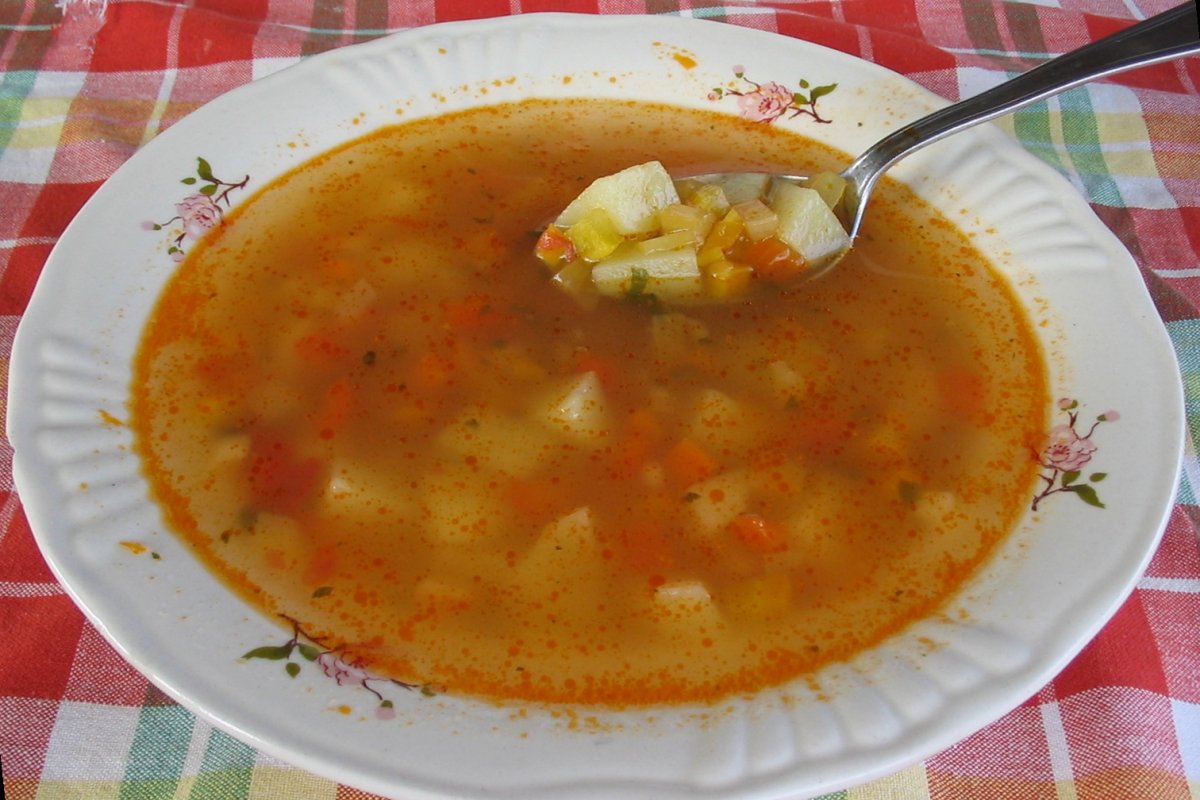
Chicken Vegetable Soup Recipe Vegetable Recipes in Urdu Indian Chinese Phlippines Pakistani Pinterest Without Oil Pinoy Style Panlasang Pinoy

Chicken Vegetable Soup Recipe Vegetable Recipes in Urdu Indian Chinese Phlippines Pakistani Pinterest Without Oil Pinoy Style Panlasang Pinoy

Chicken Vegetable Soup Recipe Vegetable Recipes in Urdu Indian Chinese Phlippines Pakistani Pinterest Without Oil Pinoy Style Panlasang Pinoy

Chicken Vegetable Soup Recipe Vegetable Recipes in Urdu Indian Chinese Phlippines Pakistani Pinterest Without Oil Pinoy Style Panlasang Pinoy

Chicken Vegetable Soup Recipe Vegetable Recipes in Urdu Indian Chinese Phlippines Pakistani Pinterest Without Oil Pinoy Style Panlasang Pinoy

Chicken Vegetable Soup Recipe Vegetable Recipes in Urdu Indian Chinese Phlippines Pakistani Pinterest Without Oil Pinoy Style Panlasang Pinoy

Chicken Vegetable Soup Recipe Vegetable Recipes in Urdu Indian Chinese Phlippines Pakistani Pinterest Without Oil Pinoy Style Panlasang Pinoy

Chicken Vegetable Soup Recipe Vegetable Recipes in Urdu Indian Chinese Phlippines Pakistani Pinterest Without Oil Pinoy Style Panlasang Pinoy


Monday, 3 November 2014

Mix Vegetable Recipe, Vegetable Recipes in Urdu Indian Chinese Phlippines Pakistani Pinterest Without Oil Pinoy Style Panlasang Pinoy

Source:- Google.com.pk

Mix Vegetable Recipes Biography

Mixed Vegetables (Japanese: ミックスベジタブル Hepburn: Mikkusu Bejitaburu?), also known as Mix Vegetable, is a romance manga by Ayumi Komura. It was serialized in Japan by Shueisha in the shōjo manga magazine Margaret from October 25, 2005 to November 22, 2007, and collected in eight bound volumes. It is licensed in English in North America by Viz Media.
Mixed Vegetables is about the relationship between the daughter of a pastry chef who wants to become a sushi chef and the son of sushi chef who wants to become a pâtissier.

Plot

The plot revolves around Hanayu Ashitaba, a chef in training. Hanayu is the daughter of the celebrated pastry shop, Patisserie Ashitaba, but all she wants to do is become a sushi chef. Hayato Hyuga is the son of the prestigious Sushi Hyuga, but he wants to be a pastry chef. They go to Oiwaka High School together. Hanayu knows she will break her parent's heart if she does not continue the bakery and become a pastry chef, but thinks if she marries Hayato, they will understand her decision.

Main characters

Hanayu Ashitaba is a 15 year old pastry chef attending Oiwaka High and training to be a sushi chef. Although her family owns Patisserie Ashitaba, one of the most prestigious patisseries in Japan, she wants to become a sushi chef. She has a best friend named Ichii and a little brother named Natsume. Natsume takes after his father in the fact that he doesn't want any boys to come near his sister. She doesn't think that her parents will let her be a sushi chef because they want her to take over the shop (Natsume's dream is to be a baseball player, so she doesn't want to put the burden of being the owner of the shop on him), so she tries to get Hayato to fall in love with her by displaying her cooking skills.
Hayato Hyuga is in the same class as Hanayu Ashitaba and Ichii at Oiwaka High, and even though his father owns the prestigious Sushidokoro Hyuga, his dream is to become a pastry chef. He appears to be very kind and very skilled with making sushi. He usually helps out at his family shop. When he was younger, he made cakes for his grandfather; It's stated that he doesn't have anyone else to taste his cakes anymore. Hanayu Ashitaba is very important to him, since he has told Hanayu about his dreams, reasons why he wanted to be a pastry chef, and about his grandfather. Hayato said he will give up his dream of being a pastry chef and take over Sushidokoro Hyugo.
Maezawa is an assistant at Patisserie Ashitaba. Maezawa is nine years older than Hanayu. Ichii stated that Hanayu doesn't like anything but sushi and that it was unusual for her to express her dislike for Maezawa. Maezawa also has very sharp taste, as shown when he is testing Hayato's sushi and tells him to keep his emotions out of his food. Hayato tends to get jealous over Maezawa, assuming he wants to be in a relationship with Hanayu, however he later find out that Maezawa is already married.

Mix  Vegetable Recipe Vegetable Recipes in Urdu Indian Chinese Phlippines Pakistani Pinterest Without Oil Pinoy Style Panlasang Pinoy

Mix  Vegetable Recipe Vegetable Recipes in Urdu Indian Chinese Phlippines Pakistani Pinterest Without Oil Pinoy Style Panlasang Pinoy

Mix  Vegetable Recipe Vegetable Recipes in Urdu Indian Chinese Phlippines Pakistani Pinterest Without Oil Pinoy Style Panlasang Pinoy

Mix  Vegetable Recipe Vegetable Recipes in Urdu Indian Chinese Phlippines Pakistani Pinterest Without Oil Pinoy Style Panlasang Pinoy

Mix  Vegetable Recipe Vegetable Recipes in Urdu Indian Chinese Phlippines Pakistani Pinterest Without Oil Pinoy Style Panlasang Pinoy

Mix  Vegetable Recipe Vegetable Recipes in Urdu Indian Chinese Phlippines Pakistani Pinterest Without Oil Pinoy Style Panlasang Pinoy

Mix  Vegetable Recipe Vegetable Recipes in Urdu Indian Chinese Phlippines Pakistani Pinterest Without Oil Pinoy Style Panlasang Pinoy

Mix  Vegetable Recipe Vegetable Recipes in Urdu Indian Chinese Phlippines Pakistani Pinterest Without Oil Pinoy Style Panlasang Pinoy

Mix  Vegetable Recipe Vegetable Recipes in Urdu Indian Chinese Phlippines Pakistani Pinterest Without Oil Pinoy Style Panlasang Pinoy

Mix  Vegetable Recipe Vegetable Recipes in Urdu Indian Chinese Phlippines Pakistani Pinterest Without Oil Pinoy Style Panlasang Pinoy

Mix  Vegetable Recipe Vegetable Recipes in Urdu Indian Chinese Phlippines Pakistani Pinterest Without Oil Pinoy Style Panlasang Pinoy